
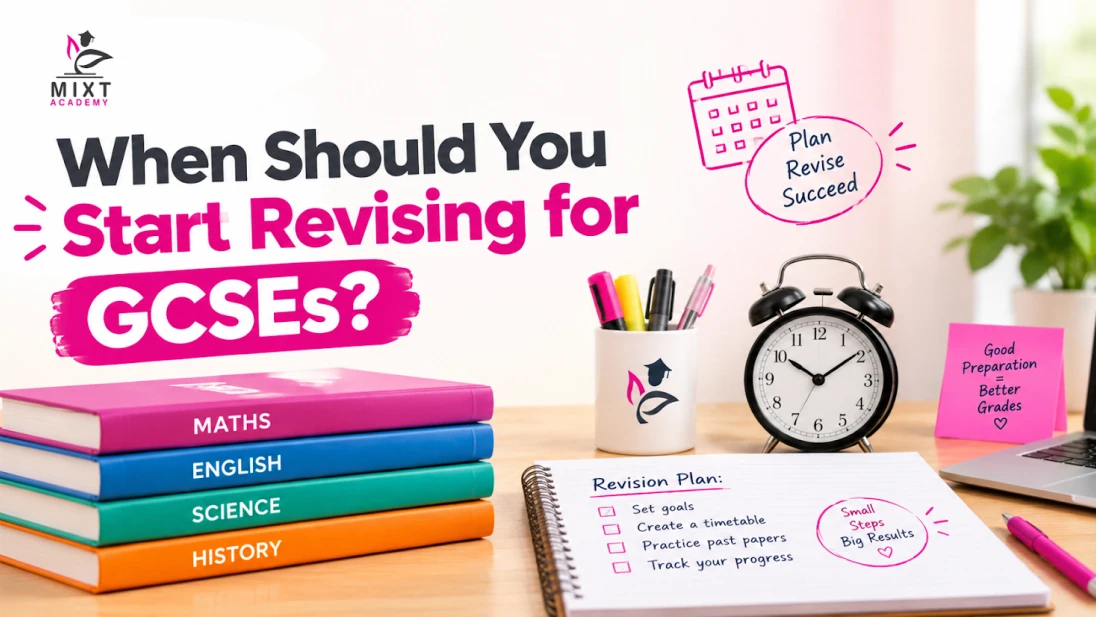
Start with light, regular recaps in Year 10. Begin more structured revision about six months before the first exam. For summer 2027, that means starting now. The first GCSE exam is on Monday 10 May 2027, which is about six and a half months from now.
There isn’t one right date to start, and most advice doesn’t go further. This guide gives a clear answer for each year group, including suggested hours, milestones, and a plan if you’re starting late. It’s for UK parents of Year 10 and Year 11 students who want facts, not pressure.
The Dates That Set Your Deadline
For “GCSE 2027 preparation”, work backwards from these published dates:
- First exam: Monday 10 May 2027
- Last exam: Friday 18 June 2027
- Contingency day: Wednesday 23 June 2027
- Results day: Thursday 19 August 2027
The Joint Council for Qualifications sets the main timetable, but individual papers may vary. Check your child’s exam board (AQA, Edexcel, OCR, or WJEC Eduqas) for the exact dates. Keep the contingency day free in case a paper needs to be rescheduled.
How to Decide Your Child’s Start Date
Try three checks. First, count the subjects; students taking 8 to 10 GCSEs will need more weeks than those taking fewer. Second, look at mock results. If there are big gaps in core subjects like GCSE Maths and GCSE English, start earlier and focus more. Third, list fixed commitments like sport, music, or part-time work, and plan around them honestly. The sooner you spot a gap, the less weekly work it takes to close it.
Year 10: Build the Habit, Not the Pressure
Year 10 students don’t need to revise full-time. Aim for a ten-minute recap per subject each week, using flashcards or a few self-test questions. Add a bit more before end-of-year exams, then use the summer to rest and work on one or two tricky topics.
The aim is to build a routine that feels normal by Year 11. It’s important to start gently, since heavy revision too early can cause burnout.
Year 11: A Month-by-Month Countdown
Use these hours as a guide, not a strict rule, and adjust them based on your child’s subjects and energy levels.
- November to December: Aim for three to four hours a week, split into 20 to 30-minute sessions. Go through each subject topic by topic, using green, amber, and red to see where marks might be at risk.
- January to February: Try six to eight hours a week. Use mock results to set your priorities, and start moving from notes to exam questions. Schools set their own mock dates, so check when yours are.
- March to Easter: Ten to twelve hours a week, including weekend blocks. Add timed past papers and mark them against the mark schemes.
- May to June: Follow the exam timetable. Keep revision sessions short and focused on recaps, and protect your sleep.
When you’re ready to turn your start date into a weekly plan, this guide will show you how to build an effective GCSE revision timetable.
Why Spacing Beats Cramming
The Education Endowment Foundation says spaced practice and self-testing work better than rereading notes. In practice, four 30-minute sessions in a week usually work better than one two-hour block. Starting earlier makes this possible, which is why a six-month window helps.
Starting Late: A Rescue Plan
If you have three months or less, be selective. Pick the subjects where the most marks are at risk, focus on red and amber topics, and do short past-paper practice most days. Keep one rest day each week. You can still make progress late on, but it’s better to cover the essentials well than to try to cover everything badly.
How Parents Can Help Without Adding Pressure
Ask, “What was the hardest topic this week?” instead of “How many hours did you do?” Make sure your child gets enough sleep. Provide a quiet workspace, regular meals, and a set time to stop for the evening. Staying calm is more important than constant supervision.
Signs the Pace Is Too Much
Look out for signs like constant tiredness, avoiding a subject, short tempers during revision, or mock marks dropping even with more hours. If you see these, reduce sessions instead of adding more, give extra rest, and talk to the school. A steady routine over six months works better than an intense one that lasts only six weeks.
If Your Child Needs a Different Timeline
Students with access arrangements, ongoing health needs, or caring responsibilities may need to start earlier and take shorter sessions. Contact the school’s exams officer as soon as you can, as arrangements are made in advance. A calm plan that fits your real situation works much better than a standard timetable that doesn’t.
When a Tutor Makes Sense
Not every student needs a tutor. A tutor can help if mock exams show gaps, motivation drops, or a subject like Maths feels too hard. A GCSE tutor online UK gives flexible one-to-one lessons at home, with timed practice and feedback from someone who knows the exam boards. Mixt Academy matches students with tutors for this stage.
Before booking, ask about the tutor’s experience with your child’s exam board, how they report progress, and whether lessons focus on the weak spots shown in mocks.
FAQs
When should Year 10 students start revising for GCSEs?
Begin with light weekly reviews when Year 10 starts. Start more organised revision roughly six months before the exams.
Is November too early to start revising for GCSE 2027?
No, starting about six months in advance makes sense. Try three to four hours a week at first, then increase over time.
How many hours a day should my child revise?
Start with about 30 minutes a day in autumn. By Easter, aim for one or two hours daily, adding extra time on weekends.
Is it too late to start revising now?
No, it’s not too late. Focus on the topics you need most, do short daily sessions, and practise exam questions.
When are the GCSE exams in 2027?
The exams take place from 10 May to 18 June 2027. Results will be released on 19 August 2027.
Should my child revise every subject at the same time?
No, it’s better to rotate subjects during the week. Spend more time on subjects with the most difficult topics, and keep short reviews for the ones your child finds easier.
Can you start revising too early?
You can only start too early if the revision is too intense. Gentle, regular reviews are always safe and useful.