
This guide breaks down the costs of UK tutoring in 2026. UK tutoring costs are broken down by subject, level, and format, so parents and students can make an informed decision before booking anything.
Tutor Fees by Experience, Subject & Learning Needs
The UK private tutor cost range is typically between £15 and £50 an hour. Private tutors who are still early in their careers, such as university students, can even charge as low as £15. Those who are specialists in their subject or in charge of exam boards can charge as high as £100+. The price of a private tutor will depend primarily on the level of study, the subject, the experience of the tutor, and the learning format.
| Tutor Tier | Typical Hourly Rate | Who You’ll Typically Find |
|---|---|---|
| Budget / Newer Tutors | £15–£25 | Undergraduates, graduates, and tutors in the early stages of their careers can gain valuable experience at affordable rates. |
| Experienced & Qualified Tutors | £25–£50 | QTS-qualified teachers, professional tutors, and subject specialists with classroom teaching are all great options in the mid-price range. |
| Specialist / Premium Tutors | £55–£100+ | Tutors are also available with experience in Oxbridge programmes, exam preparation, 11+ programmes, and SEN, and tutors who prepare for GCSE and A level exams. |
Tutor Costs by Education Level
Generally, it will cost you more to get advanced tutoring for complex subjects. This is because the further up in school you are, the less willing tutors are to teach further sciences, further maths, A Levels, or IB to a higher standard.
| Education Level | Typical Hourly Rate |
|---|---|
| Primary | £15–£30 |
| Key Stage 3 (Years 7–9) | £20–£32 |
| GCSE | £22–£45 |
| A-Level | £28–£55 |
| International Baccalaureate (IB) | £30–£55 |
| University Tuition & Admissions Support | £35–£100+ |
Primary School Tutor Costs
Primary school tutoring costs typically range from £15 to £30 per hour because tutoring is less about refined exam techniques and more about core learning in maths and literacy, and confidence building. Rates are higher for verbal and non-verbal reasoning sessions when preparing students for the 11+ and grammar school entrance exams.
GCSE Tutor Costs
GCSE tutor costs typically range from £22 to £45 per hour. Tutors who prepare students for more difficult subjects, like further maths or triple science, and tutors who highly specialise in exam boards’ teaching will charge at the higher end of that range. In the lead-up to exams, gcse tutoring costs more, so book sessions in advance to get the best deal.
A Level Tutor Costs
A Level tutoring will cost anywhere from £28 to £55 per hour. A Level tutoring requires a much higher level of subject coverage, so many families will only hire online A Level tutors who have a degree in the subject, alongside teaching experience.
IB Tutor Costs
Since most price guides don’t differentiate between IB and A Level tutoring, it takes more guessing to determine the costs for IB tutoring. However, the two types of tutoring are not the same. IB tutors are required to help with more things, such as internal assessments and the extended essay, in addition to regular subject tutoring. For these reasons, there are far fewer IB tutors. Because of this, IB tutoring costs £30 to £55 per hour. IB tuition costs are comparable to A Level tutoring, but higher-level subjects, especially science and mathematics, are more expensive.
University and Admissions Tutor Costs
There is a very large range of costs for university-level tutors and tutors for specialised admissions support, such as tutors for Oxbridge interview preparation, admissions test preparation for medicine, and personal statement preparation. With less qualified university-level tutors, costs range from £35 to £100+ per hour.
Worried About Your Child’s Grades?
Give give them personalised support from qualified UK tutors who make learning easier and more enjoyable.Tutor Prices by Subject
Costs vary by subject almost as much as they vary by level. Core subjects with a large tutor pool are the less expensive tutoring subjects. Specialist subjects, which are harder to tutor, cost more.
| Subject Group | Typical Hourly Rate | Why Prices Vary |
|---|---|---|
| Maths | £25–£45 | Consistently high demand, balanced by a large number of qualified tutors across all levels. |
| English (Language & Literature) | £25–£45 | Popular subject with strong tutor availability, keeping prices relatively competitive. |
| Sciences (Biology, Chemistry & Physics) | £28–£50 | Higher rates reflect the specialist knowledge required, particularly for GCSE, A-Level, and Physics tuition. |
| Modern Languages (French, Spanish, German, Chinese, etc.) | £28–£50+ | Less commonly taught languages and native-speaking tutors can command higher fees due to limited availability. |
| Humanities (History, Geography, Business & Economics) | £22–£40 | Good tutor availability generally keeps prices moderate, although economics tutors often charge towards the higher end. |
A quick trend to know: out of all the STEM subjects, physics and further maths often come out on top in terms of pricing, as they require a specialisation that fewer tutors are confident in covering at a higher level.
Online vs Face-to-Face Tutoring
| Tutoring Format | Typical Hourly Rate | Best Suited To |
|---|---|---|
| Online tutoring | £15–£45 | Students seeking flexibility, a wider choice of tutors, and convenient learning from home. |
| Face-to-face (in-person) | £25–£55 | Younger learners, practical subjects, or students who benefit from in-person interaction and support. |
| Small group tutoring (2–6 students) | £10–£20 per student | Families looking for a more affordable option and students who enjoy collaborative, peer-based learning. |
The pricing difference between online tutoring and in-person is usually about 10%-20%, with the absence of travel factoring a lot into that. This is a clear benefit for the students, as it gives them a wider net to catch the right tutor, allowing them to search for online tutors UK.
However, not all things are equal when it comes to pricing. A small number of websites will actually have their online tutoring priced above in-person learning because their network of online tutors is filled with specialists. The pricing differentiator is almost always the level of experience a tutor has, not the delivery type.
Tip for Parents:
Costs can be very tight during the school year. Before deciding that in-person tutoring is your only option, check first to see if the tutor you are contacting offers a lower rate for online tutoring. The travel cost for the tutor is usually factored in and can lead to meaningful savings.
What Affects Tutor Prices?
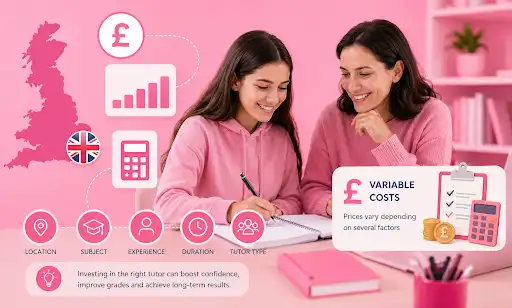
Many things factor into a dedicated tutor’s pricing, such as:
Tutor’s qualifications and experience
A tutor who has QTS and several years of teaching experience will charge significantly more than an untrained tutor.
- Subject and level: The cost of learning an advanced or specialist subject increases as the number of confident tutors for the subject decreases.
- Location: Tutors based in London or the Southeast can typically charge 15-25% more than the national average due to the cost of living in London. Manchester, Birmingham, Bristol, or Liverpool have tutoring rates that are much closer to the national average. Online tutoring balances these, as location is considerably less relevant.
- Format: The most common formats for tutoring are covered in detail in the earlier sections. These are online, face-to-face, or small-group.
- Group size: Group tuition offers students a lower cost per participant than one-to-one tuition.
- Timing and demand: Prices normally increase due to higher demand in the lead up to the exam sessions (Jan to May). Book a tutor during September and October to obtain a larger selection of tutors.
- Exam board specialism: Since tutors match your child’s exam board exactly, tutors who offer these services charge more, but students gain greater value for money since these tutors clarify what is examined.
Common Mistake
The most important point to receive value for money is to avoid choosing a tutor because they are the cheapest. You are guaranteed to lose more money in the long run because of wasted lessons and poor exam performance after choosing the cheapest tutor.
Tutor Experience Levels: What Are You Paying For?
| Tutor Type | Typical Hourly Rate | What You’re Paying For |
|---|---|---|
| Current student / early-career tutor | £15–£25 | Recent exam experience, relatable teaching style, and affordable support. |
| Experienced, QTS-qualified teacher | £30–£55 | Professional teaching experience, in-depth curriculum knowledge, and familiarity with UK exam boards. |
| Subject specialist / premium tutor | £55–£100+ | Advanced subject expertise, proven results, specialist exam preparation (e.g. 11+, GCSE, A-Level, Oxbridge), or SEN support. |
No one tier of tutor is automatically “better” than another. For students who need support with motivation rather than exam strategy, a recently graduated confident student tutor could be a great match.
However, a tutor who is DBS checked and QTS-qualified is a good match for a student who is working towards a target grade for GCSEs, A-Levels, or the IB, since this tier has a mid-to-high market range because they are likely to have both the curriculum and teaching experience that is required.

Consult with one of our 1,000+ qualified tutors.
How to Choose the Right Tutor?
Price alone is not the complete picture. Look at these factors before booking:
- Qualifications: Are they QTS-qualified, or do they have a degree? Check where it is not listed.
- DBS Check: Tutors of students under 18 should have a DBS check.
- Exam Board Knowledge: Do they know what your child’s exam board is (AQA, OCR, Pearson Edexcel, IB), rather than knowing the subject?
- Track Record: What results have they gotten for students, and not just how long they have taught?
- Teaching Style Fit: This is exactly what a trial lesson is meant to check.
- Plenty of Flexibility: Tutors who have a plan that lasts several lessons are better than those who plan only one lesson at a time.
Tip for Parents
Books with a trial session instead of many lessons. A trial is the best way to see if the tutor is a good fit, and most reputable tutors and platforms offer one.
How to Save Money on Tutoring?
Paying for private tuition does not have to mean paying the high costs. Use a few of these tips to lower your costs and keep high-quality tutoring:
- Try a Group Session: Sharing your tutor with up to 5 other students will often give you a group rate that is incredibly low.
- Buy Lessons in Bulk: Pay for 5, 10, or more sessions at one time for a discount.
- Off-Peak Sessions: Pay for lessons in the fall, as post-autumn lessons will be more affordable.
- Take the First Lesson Free: Look for tutors with free first lessons to save the most by trying before you buy.
- Good Money Saving Tips: Tutors may offer discounts for booking a bulk group session or for siblings, so ask.
Why Is Online Tutoring Growing in the UK?
Readily available recorded lessons are also a reason many parents are choosing an online tutoring platform like Mixt Academy. While some in-person tutoring programs offer a recording for you to reference, online tutoring programmes record all sessions to create an online library of your lessons. This feature allows students to concentrate on a lesson on a tricky subject days or even hours before a test.
Why Choose Mixt Academy?
Once you have a rough sense of what tutoring should cost, the next thing people ask is where you actually find a tutor that’s worth that budget. And here’s the part where Mixt Academy really stands out:
- One-on-one lessons start around £15–£25 per hour, covering GCSE, A Level and IB.
- Pearson Edexcel Approved Centre (Centre No. 97841), so there’s that proper, exam-board-style backbone.
- DBS-checked, no exceptions. Each tutor is vetted for safety before they work with a student.
- A free 30-minute trial lesson, so you can judge the match and the teaching style before you hand over any payment.
- Major exam boards are all in there: AQA, Pearson Edexcel, OCR, and Cambridge, meaning teaching stays aligned with what is actually being assessed.
- Every lesson gets recorded, so students can revisit a confusing bit of logic whenever, even the night before an exam.
Final Thoughts
There are a few factors that determine how much a private tutor costs in the UK. The level of your child, the subject, the area, and the experience of the tutor determine how much to budget. Therefore, as per the overview, keep in mind that newer tutors charge around £15–£25. Experienced tutors charge £25–£50. A genuine subject specialist will cost £55 and up.
What is more important than price is how much you want to achieve the goal of considering a tutor, whether it is a specific grade, a confidence boost, or learning some techniques that are related to the exam.
Ready to see what the right tutor could achieve for your child from £20/hr? Book a free trial lesson with Mixt Academy. You have nothing to pay before matching with a subject expert.