
Results day feels enormous when you are standing in the middle of it, and a set of bad GCSEs can make it feel like every door has just closed at once. It has not. Thousands of students see a fail on results day every August, and the vast majority of them go on to sixth form, college, apprenticeships and careers they are genuinely proud of. What matters now is understanding exactly what a failed GCSE result means, what you are required to do next and what options genuinely suit your situation.
Key Takeaways
- Grade 4: Standard GCSE pass; grade 5 is a strong pass.
- English & Maths: Below grade 4 usually means continuing study until 18 or a pass.
- Other Subjects: Resits are optional unless required for your next course.
- Your Options: Resits, Functional Skills, vocational courses and apprenticeships.
- Keep Moving Forward: Failed GCSEs do not automatically stop further study or career opportunities.
If you are aged 16–18 in England and have not achieved grade 4 or above in GCSE English or maths, you will normally need to continue studying these subjects as part of your post-16 programme. The exact qualification depends on your previous grade and study programme.
Understanding GCSE Grades and What Counts as a Fail
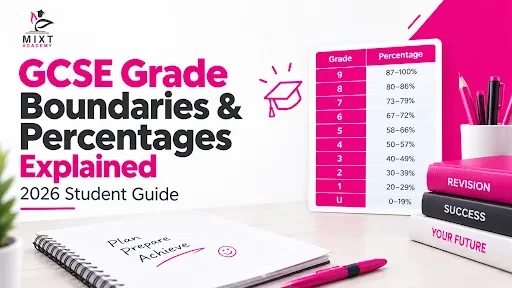
GCSE grades run from 9 to 1, replacing the old A* to G system. If you are unsure what your result means, the key grades to understand are:
- Grade 4: Standard pass, roughly equivalent to the old grade C.
- Grade 5: Strong pass.
- Below Grade 4: Officially classed as a fail.
Learn more about how GCSE grades are awarded in our guide to GCSE grade boundaries.
Do You Have to Retake a Failed GCSE?
Whether you need to retake a GCSE depends on the subject and your future plans.
- English Language and Maths: If you achieve below grade 4, you generally need to continue studying towards a pass until you pass or turn 18.
- Other subjects: Retaking is usually optional unless the qualification is required for your chosen course or career.
- Check course requirements: A failed GCSE does not mean you must retake it. First, check whether the subject is needed for your next step.
A single failed GCSE does not have to determine what you do next. There are several routes available depending on your results and goals.
Worried About Your Child’s Grades?
Give give them personalised support from qualified UK tutors who make learning easier and more enjoyable.Your Options After Failed GCSE Results
There is no single correct path here. The right option depends on your grades, your goals and how you actually work best.
1. GCSE Resits
If you need to improve a GCSE, you can retake the exam through your school, college or an approved exam centre. English and Maths are the most common subjects students need to resit. Other GCSEs can also be retaken if they are important for your chosen course or career.
Preparing differently can make a resit more productive. Focus on the topics where you lost marks, practise past papers and work on exam technique rather than simply repeating your previous revision.
2. Retake Alongside New Qualifications
You may not need to put your education on hold while retaking a GCSE. Some sixth forms and colleges allow students to start A Levels or other Level 3 qualifications while continuing with required English or Maths study.
This can allow you to work towards your next qualification while addressing the GCSE requirement at the same time. Check with your chosen college to see whether this option is available.
3. Functional Skills Qualifications
Functional Skills English and Maths can provide an alternative route for some students who do not achieve a GCSE grade 4. These qualifications focus more on practical skills used in everyday life, education and work.
However, Functional Skills are not accepted as a GCSE replacement by every university or course. Always check the specific entry requirements before choosing this route.
4. Vocational Qualifications
If traditional GCSEs and exams are not the right fit, vocational qualifications can offer a more practical approach to further education. Options include BTECs, T Levels and NVQs, depending on your interests and career plans.
A failed grade in one subject does not necessarily define your overall results. Colleges, sixth forms, universities and employers may consider your complete set of GCSEs, depending on their entry requirements.
Many courses ask for five GCSEs at grade 4 or above, often including English and Maths. However, requirements vary, and subjects such as Maths, Science and Modern Foreign Languages may have specific grade requirements. Always check the criteria for your chosen course or college.
| Qualification | What It Involves | Level Equivalent | Worth Knowing |
|---|---|---|---|
| BTEC | Practical, coursework-based study across a wide range of subject areas | Level 2 equals GCSE, and Level 3 equals A Level. | Entry-level options exist for students without prior GCSEs. |
| T Level | New technical qualifications built around a specific career path | Equivalent to three A Levels | Combines classroom study with a substantial industry placement |
| NVQ | Workplace-based qualifications focused on practical, job-specific skills. | Level 2 equals GCSE, rising up to Level 7, equivalent to a master’s degree. | Suits students who already know the direction they want to take |
These qualifications can develop subject knowledge alongside practical or work-related skills, giving you another way to continue your education.
5. Apprenticeships
An apprenticeship lets you earn while you train, typically split around 18% on the job and 20% studying, usually at a local college. Programmes run anywhere from one to six years depending on the level, with Level 2 roughly equivalent to GCSEs, Level 3 to A Levels, and Level 7 to a postgraduate Master’s degree.
Career paths range from chef and electrician to dental nurse and teaching assistant. Entry requirements vary by employer and level, and for many Level 2 apprenticeships, no prior qualifications are required at all, since English and Maths Functional Skills are typically built into the training.
What to Do After Receiving Your GCSE Results
Once you receive your results, focus on understanding your options rather than making a rushed decision. Taking a few practical steps can help you choose the right route and prepare for your next stage of education.
Speak to Your School or College
Talk to your school, sixth form or college about your results and future plans. They can explain whether you need to resit a subject, meet specific entry requirements or consider an alternative qualification.
Check Whether a Remark Is Appropriate
If you believe there may have been an issue with your exam or marking, ask your school or college about the review or remark process. They can explain whether requesting a review is appropriate and what it could mean for your grade.
Keep Learning and Start Preparing Early
Do not let disappointing GCSE results stop your learning. If you need to resit a subject, start preparing early by identifying weak areas, practising exam questions and improving your exam technique.
You can also consider reputable online tutoring based on the subjects, learning style and language that suit you best. One-to-one support can help you stay focused and build confidence while working towards your next academic goal.
Famous People Who Failed Their GCSEs
GCSE results are important, but they are not the only factor that shapes your future. Some well-known figures left school with limited formal qualifications and went on to build successful careers in business or entertainment.
- Richard Branson: Left school at 16 without completing his formal school qualifications before going on to build the Virgin business group.
- Lord Alan Sugar: Left school with limited formal qualifications and later built a successful career in business and television.
- Maisie Williams: Did not complete her GCSEs before becoming widely known for her role in Game of Thrones.

Consult with one of our 1,000+ qualified tutors.
Their experiences show that one set of GCSE results does not have to determine your future. What matters next is how you respond, continue learning and choose a path that suits your goals.
How Mixt Academy UK Can Help You Improve Your GCSE Results
Failed GCSE results can often be linked to specific areas such as weak exam technique, time management or gaps in subject knowledge. Identifying these weaknesses early can help students prepare more effectively for a resit instead of repeating the same approach.
Mixt Academy UK provides online GCSE tutoring across the UK and internationally, with DBS-checked tutors offering personalised one-to-one support. Sessions focus on individual weaknesses, exam technique and past paper practice, helping students build skills and prepare with greater confidence.
Conclusion
Failing your GCSEs can feel like a major setback. However, one set of results does not define your ability or future. There are still several ways to move forward. You can resit subjects, start another qualification, choose vocational study or consider an apprenticeship. Take time to understand your options and decide which route fits your goals.
Most importantly, do not stop learning. Identify the areas you need to improve and seek the right support. Online tutoring can provide focused help based on your subjects, learning style and preferred language. With consistent effort and preparation, you can work towards better results and new opportunities.
Frequently Asked Questions
What grade counts as a fail at GCSE?
Anything below a grade 4 counts as a fail. Grade 4 is the standard pass, roughly equivalent to the old grade C, and grade 5 is classed as a strong pass.
How many times can you resit a GCSE?
There is no official limit on how many times you can resit. For English and Maths specifically, you are required to keep resitting until you achieve a grade 4 or turn eighteen, whichever comes first.
Do failed GCSEs stop you from going to university?
No! Failed GCSE results do not permanently block university entry. Most universities look at your overall academic profile, including A Level or equivalent results, and many accept a successful resit as proof you have addressed the gap.
Is it too late to improve bad GCSEs?
Not at all! Students improve significantly between a first attempt and a resit every single year, particularly with focused, personalised support rather than repeating the same revision approach that did not work the first time.
Are online GCSE tutors as effective as in-person tuition for a resit?
Yes, when the sessions are structured properly. Online GCSE tutors can offer the same one-to-one focus, marked practice and exam technique work as in-person tuition, with the added benefit of flexible scheduling around a student’s existing timetable, which matters a great deal when a resit is being prepared for alongside a new course.