
Learning a new language quickly is a common goal, and Spanish is one of the most requested languages among UK students and adult learners. Some want conversational Spanish before a holiday. Others are preparing for GCSE or A-level exams. Many simply want to keep up with a family member or partner who speaks it.
The phrase “how to learn Spanish fast” gets searched thousands of times a month, but speed means different things to different people. A few searchers may have typed “how to learn Spain” when what they actually meant was how to pick up the language or prepare for time studying there. Either way, the goal is the same: real progress without wasted effort.
Fast progress is possible, but it depends on how you define success. Holding a basic conversation within a few months is realistic for most learners. Full fluency, with natural pronunciation and confident writing, takes longer and depends on consistent practice. This guide covers what genuinely speeds up Spanish learning, a sensible study routine, and where structured tutoring fits in.
What Does It Really Mean to Learn Spanish Fast
“Fast” is relative. A learner studying 30 minutes a day will progress differently from one studying two hours. Someone who already speaks French or Italian will find Spanish grammar more familiar than a first-time language learner.
There’s also a meaningful difference between basic conversational ability and true fluency. Conversational ability means ordering food, asking for directions, and holding a simple exchange about daily life. Fluency means following fast native speech, expressing nuanced opinions, and writing with accuracy. The first is achievable within months. The second typically takes years of regular use.
Several factors shape how quickly someone learns: existing knowledge of Spanish or a related language, total study time and how it’s spread across the week, age (younger learners often absorb pronunciation faster, while older learners often bring stronger study discipline), exposure to real Spanish rather than just textbook exercises, and consistency, which matters more than hours in any single session.
Active practice, actually speaking, listening and writing, drives progress far more than memorising grammar rules in isolation. Grammar matters, but only once it’s applied.

Consult with one of our 1,000+ qualified tutors.
How to Learn Spanish Fast: 8 Practical Strategies
1. Set a Specific Spanish Learning Goal
“Get better at Spanish” is too vague to act on. A goal like “hold a 5-minute conversation about my daily routine within eight weeks” gives you something to measure. UK students preparing for exams can set goals around specific paper types, such as listening comprehension or the speaking assessment.
2. Learn High-frequency Vocabulary First
The most common 1,000 Spanish words cover a large share of everyday conversation. Learning words like querer (to want), necesitar (to need) and tener (to have) early gives you more usable language than memorising obscure vocabulary lists.
3. Build a Daily Speaking Habit
Speaking from week one, even badly, trains your brain to retrieve words under pressure. Ten minutes of speaking practice daily, whether with a tutor, a language partner, or by talking to yourself about your day, builds fluency faster than passive study alone.
4. Practise Listening with Appropriate-Level Content
Native-speed podcasts too early can be discouraging. Choose content matched to your level, then gradually increase difficulty. Slowed-down news broadcasts or graded audio courses work well for early learners.
5. Learn Grammar Through Real Examples
Rather than memorising conjugation tables in isolation, learn grammar through sentences you’ll actually use. Seeing “hablo, hablas, and habla” in real dialogue sticks better than a table copied from a textbook.
6. Use Spaced Repetition Effectively
Spaced repetition systems, which show vocabulary just before you’re likely to forget it, work well for retention. Apps using this method suit a daily habit, provided the words are ones you’ll actually use.
7. Read and Write Regularly
Short articles, children’s books, or graded readers build vocabulary in context. Writing a few sentences a day forces you to apply grammar rules actively rather than just recognising them.
8. Get Feedback From a Tutor or Experienced Speaker
Self-correction has limits. A tutor or fluent speaker can spot pronunciation habits and word choices a learner wouldn’t notice alone, often the difference between plateauing and continuing to improve.
What Is the Best Way to Learn Spanish
There isn’t a single best way to learn Spanish that suits everyone. The right approach depends on your goals, schedule, confidence and how you learn best. Self-study, using books and structured courses, suits disciplined learners who don’t need external accountability.
Apps and digital resources build vocabulary and grammar recognition well in short daily sessions, though they rarely develop natural speaking ability alone. Videos and podcasts help listening comprehension and pronunciation once you’ve built a basic vocabulary foundation.
Conversation practice, with a language exchange partner or tutor, is essential for real speaking confidence and thinking in Spanish rather than translating. Group classes offer structure and social motivation, though individual speaking time is often limited. One-to-one tutoring, such as that offered by Mixt Academy UK, provides personalised feedback and adjusts to your learning pace, which is especially beneficial for exam preparation.
For most learners, combining independent practice, such as apps or reading, with structured tutoring gives the strongest results. Independent study builds vocabulary; tutoring turns that knowledge into usable, corrected speaking ability.
Worried About Your Child’s Grades?
Give give them personalised support from qualified UK tutors who make learning easier and more enjoyable.How Long Does It Take to Learn Spanish
There’s no guaranteed timeline, but general patterns exist. A learner studying consistently for around 5 hours a week, including speaking practice, might reach basic conversational ability within four to six months. A more confident intermediate level, where you can discuss opinions and handle unpredictable conversations, typically takes a year or more. Progress depends on:
- How many hours are spent studying each week
- How much of that time involves actual speaking, not just reading or apps
- Previous experience with another language
- Exposure to Spanish outside formal study sessions
- Consistency over weeks and months, rather than occasional bursts
- The quality of feedback received on mistakes
- Whether the goal is conversational ability or academic proficiency
Becoming conversational and becoming highly proficient are different milestones with different timeframes. Anyone promising guaranteed fluency by a fixed date is overstating what language learning can reliably deliver.
What If You Are Learning Spanish for GCSE or A-Level
Academic Spanish differs from casual conversational learning. Exam boards assess vocabulary range, grammar accuracy, reading comprehension, listening, speaking and writing against specific mark schemes, not general fluency.
Students need set vocabulary lists, accurate tenses in writing, and spoken answers structured to match assessment criteria. Reading and listening papers often include unfamiliar contexts, so exam technique, identifying key words and managing time, matters as much as language knowledge.
This is where working with the UK Spanish tutors can help. A tutor familiar with the specification can identify a student’s weak areas, whether that’s subjunctive tense, listening under exam conditions, or spoken fluency, and build practice around what the qualification requires.
A Simple Spanish Study Routine for 30, 60 and 90 Minutes a Day
UK students juggling school, GCSE or A-level preparation, university, or work rarely have hours free for Spanish. A structured routine makes limited time more effective.
| Activity | 30 minutes | 60 minutes | 90 minutes |
| Vocabulary review | 5 min | 10 min | 15 min |
| Grammar practice | 5 min | 10 min | 15 min |
| Listening | 5 min | 15 min | 20 min |
| Speaking | 10 min | 15 min | 25 min |
| Reading | 3 min | 5 min | 10 min |
| Writing | 2 min | 5 min | 10 min |
Speaking should never be the first thing cut when time is short. Even 5 minutes of talking aloud, describing your surroundings or summarising your day, keeps active recall sharp. Students preparing for Spanish exams with Mixt Academy UK should weight listening and writing practice more heavily as assessments approach.
How to Learn Spanish in 2026 Using Modern Learning Tools
Learners planning to learn Spanish in 2026 have more tools available than ever, though not all replace the fundamentals. Digital flashcards support vocabulary retention through spaced repetition. Language-learning platforms offer structured paths for grammar and vocabulary building. Audio resources, from podcasts to graded listening courses, develop comprehension at a manageable pace. Online conversation practice, connecting with native speakers by video call gives real speaking exposure without travel.
AI-assisted practice tools offer useful repetition and instant grammar checks for independent drilling. Online tutoring adds something these tools generally can’t: personalised feedback from someone who notices patterns in your specific mistakes and adjusts lessons accordingly. Technology supports learning well but works best alongside real speaking practice and human interaction, not instead of it.
Common Mistakes That Slow Down Spanish Progress
- Focus On Essentials: Rather than trying to memorise every word, prioritise high-frequency vocabulary that appears most often in everyday Spanish conversations and texts.
- Start Speaking Early: Waiting until your grammar feels perfect can delay speaking practice and prevent you from developing confidence through real conversations effectively.
- Study With Consistency: Regular short study sessions build stronger recall than occasional long bursts that are difficult to maintain over time for beginners.
- Balance Apps With Practice: Using apps alone limits progress when you lack speaking practice, personalised feedback, and opportunities to apply new language naturally regularly.
- Prioritise Early Pronunciation: Ignoring pronunciation at the beginning can reinforce incorrect sounds that become harder to recognise and correct later with consistent speaking practice.
- Think in Spanish: Translating every sentence word-for-word can slow comprehension because natural Spanish often uses different structures from English expressions in context.
- Choose Your Level: Consuming content far above your current level can create frustration and make it harder to understand useful vocabulary and grammar.
- Get Regular Feedback: Without feedback from tutors, teachers, or fluent speakers, repeated mistakes can become habits that remain difficult to correct later independently.
Consult with one of our 1,000+ qualified tutors.
How I Learned Spanish Fast: What Personal Success Stories Can Teach You
Search for “how I learned Spanish fast”, and you’ll find countless personal accounts online. While every story is different, successful journeys tend to share the same patterns.
Consistent daily practice appears in nearly every account, even when sessions were short. Learners who spoke early, before feeling ready, generally progressed faster than those who waited. Most focused on high-frequency vocabulary and built listening exposure into their week, even passively, through music or podcasts.
Correcting mistakes quickly, rather than letting them become habits, comes up repeatedly, as does having a structured goal such as a trip or an exam. Almost every account mentions regular feedback, whether from a tutor, a language partner, or a patient native speaker.
Can Online Spanish Tutoring Make Learning Faster
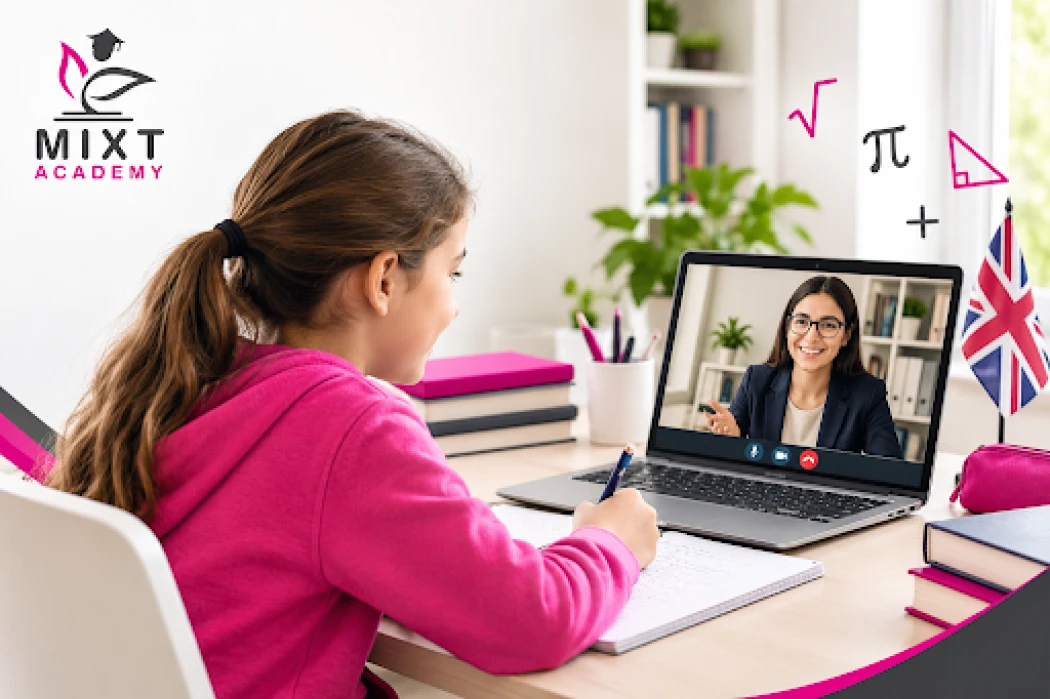
Tutoring can reduce wasted study time by giving learners things independent study can’t easily provide: personalised correction that catches errors before they become habits, accountability that keeps momentum going, and speaking opportunities built into every week rather than left to motivation.
A tutor can also spot patterns a learner might miss alone, such as consistently mixing up “ser and estar”, and target practice directly at that weakness. This kind of focused work, combined with help on difficult concepts like subjunctive mood, often speeds up progress considerably. That said, tutoring doesn’t guarantee faster results for everyone. Outcomes still depend on how much a learner practises between sessions.
How Mixt Academy Helps Students Learn Spanish Online in the UK
Many learners lose momentum because they lack structure or honest feedback. Mixt Academy UK’s online Spanish tutoring gives students personalised one-to-one lessons built around their specific weaknesses, whether that’s pronunciation, grammar accuracy, or exam technique.
Sessions combine speaking practice with GCSE tutor feedback, following a structured plan tailored to GCSE, a level, or general conversational goals. Lessons are flexible and delivered online, fitting around school, university, or work commitments.
Closing of the Guide
Learning Spanish fast isn’t about shortcuts. It comes down to consistency, active speaking from early on, and regular listening practice, built around high-frequency vocabulary rather than exhaustive word lists.
Structured practice matters more than any single app or resource. A clear routine, paired with honest feedback on your mistakes, tends to produce faster and more lasting progress than studying alone without direction.
If you’re a UK student or parent looking for structured, personalised support, whether for GCSE and A-level preparation or general conversational confidence, Mixt Academy’s online Spanish tutoring offers one-to-one lessons built around your specific goals and pace.
We Answer Every Question Of Parents
Can I learn Spanish quickly as a complete beginner?
Yes, beginners can make noticeable progress within a few months with consistent practice. Basic conversational ability is realistic within four to six months if you study regularly and speak from early on, rather than waiting until you feel “ready”.
What is the fastest way to improve Spanish speaking?
Speaking daily, even briefly, is the single most effective habit. Combine this with feedback from a tutor or fluent speaker to correct mistakes early, before they become fixed habits that are harder to unlearn later.
Can I learn Spanish in three months?
You can reach a basic conversational level in three months with consistent, focused practice, particularly speaking and high-frequency vocabulary. Full fluency in that timeframe is unrealistic for most learners, regardless of study method.
How many Spanish words should I learn first?
Focus on the most common 500 to 1,000 words first. This vocabulary covers a large proportion of everyday conversation and gives you far more practical usability than memorising rare or specialised words early on.
Is Spanish difficult for English speakers?
Spanish is generally considered one of the more accessible languages for English speakers, thanks to shared vocabulary roots and consistent pronunciation rules. Grammar concepts like verb conjugation and gendered nouns still require dedicated practice.
Can online tutoring help with GCSE or A-level Spanish?
Yes, tutoring focused specifically on exam requirements can help students target weak areas, whether that’s listening comprehension, written accuracy, or spoken fluency, and practise using the same format and expectations as the actual assessment.