
Not all unmotivated students are the same. Some feel anxious and shut down under pressure. Others have switched off because revision seems pointless. Some are pushed so hard by well-meaning adults that they stop wanting to try. Each situation needs a different approach, which is probably why generic advice about motivation often misses the mark.
This guide explains what really builds motivation, why pushing students harder can sometimes make things worse, and how to tell the difference between normal exam nerves and signs a student needs extra support.
Understanding Why Students Lose Motivation During Exams
Before looking at ways to help, we need to understand why students often struggle to stay motivated for exams.
- Students may worry about failing or letting down their parents and teachers.
- A heavy workload can feel overwhelming and hard to handle.
- Some students struggle because they don’t know how to study or revise effectively.
- Past low grades can make students lose confidence.
- Comparing themselves to classmates can add extra pressure.
- Studying too much without taking breaks can lead to tiredness and burnout.
Understanding these problems is the first step to offering real help.

Consult with one of our 1,000+ qualified tutors.
Proven Ways to Motivate Students for Exams
These are some effective ways to help motivate students as they prepare for exams.
Break the Work into Small Steps
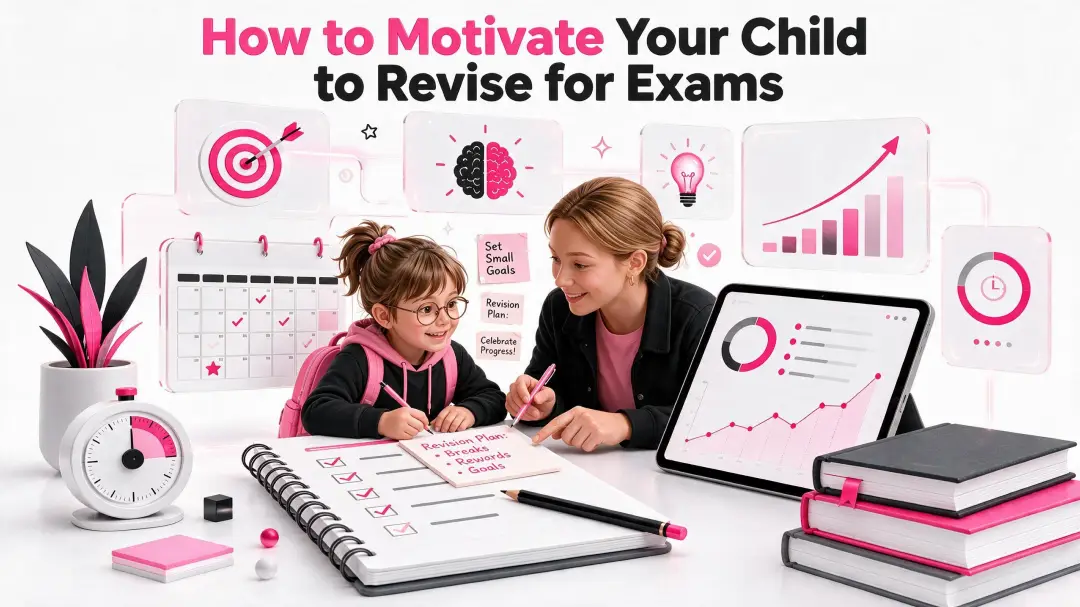
Looking at an entire textbook can overwhelm students and often leads to a loss of motivation. To help, encourage them to break their revision into small, manageable pieces.
Rather than saying, “You need to study science today,” try, “Let’s review the chapter on plants for 30 minutes.” Starting with small tasks feels easier, and finishing them gives students a sense of accomplishment that encourages them to continue.
Create a Realistic Study Schedule
Having a routine removes the stress of choosing what to study each day. Work together with your child to make a weekly study timetable.
Keep the schedule realistic and avoid filling every hour with study time. Allow space for hobbies, relaxation, and family. When students know they have free time ahead, they are more likely to focus during study sessions.
Use Varied and Engaging Study Techniques
Repeating the same study routine can make students lose motivation. Try using different learning methods to keep things interesting:
- Visual learners: Mind maps, diagrams, colour-coded notes
- Auditory learners: Recording notes, discussion groups, educational podcasts
- Kinaesthetic learners: Flashcards, practice papers, teaching others
Online tutoring platforms such as Mixt Academy UK, provide interactive lessons with multimedia resources. These features help make revision more interesting and effective.
Practice with Past Papers and Mock Exams
Getting used to the exam format is one of the best ways to build confidence. Practising regularly can:
- Reduces exam anxiety
- Improve time management skills
- Identify weak areas needing attention
- Build confidence through repeated success
Online private tutors can give focused feedback on practice papers. This helps students understand their mistakes and improve more quickly than studying on their own.
Worried About Your Child’s Grades?
Give give them personalised support from qualified UK tutors who make learning easier and more enjoyable.Celebrate the Effort, Not Just the Grades
Many students lose motivation because they worry about failing. To help, praise their hard work instead of focusing only on their final grades.
If you notice them studying hard for an hour, let them know you’re proud of their effort. You could also give small rewards. For example, after a week of sticking to their study plan, treat them to their favourite meal or a movie night. This kind of support helps build their confidence.
Make Sure They Take Proper Breaks
Nobody can study for hours without a break. The brain needs time to rest and take in new information. Encourage your child to try the Pomodoro Technique: study for 25 minutes, then take a 5-minute break.
During breaks, suggest they step away from their desk. They can stretch, have some water, or grab a snack. Eating well and getting enough sleep also help keep their brain active and motivated.
Get Help from Expert Tutors
Sometimes, parents and children argue about homework. This is totally normal. Often, the best way to help a student is to bring in a friendly expert who can explain things clearly.
This is where online tutors in London can really change how a student feels about exams. A good tutor reduces stress and makes learning enjoyable. If you’re looking for private tutors online, you can find experts who give your child one-on-one attention. Private tutors will figure out what your child struggles with and help them improve.
At Mixt Academy UK, we’re proud to offer top-quality online tutoring in the UK. Our expert tutors understand the UK school system and know how to help students overcome their exam worries.
Remind Them of the End Goal
Revision can get dull, and students may lose sight of why they are studying. Remind them of the bigger picture.
Ask your child about their dreams. Maybe they want to attend a specific university or have an exciting job one day. Remind them that exams are just one step toward those goals. Focusing on the end goal can help bring back their motivation.
What Actually Builds Motivation
Here are a few things that often help, based on real experience:
- Link revision to something real. Saying “you need good grades” is too vague, but explaining that “this subject helps you get into the course you want” is much clearer. The more personal and specific the reason, the more it will matter to them.
- Praise effort, not just results. Recognising when your child finishes a revision session is more helpful in the long run than only praising a good mock exam score. This shows them that trying matters, no matter the outcome, and encourages them to keep going.
- Help your child see their progress. A syllabus can seem never-ending, but breaking it into small parts and checking each one off shows them they are making progress. This visible progress often boosts motivation.
- Involve your child in making the plan. They are much more likely to stick to a revision timetable they helped create than one someone else gave them.
Building Confidence in the Final Weeks
As the exam approaches, a few simple actions can really help:
- Try practising with a timed past paper in a quiet room, without using notes. This makes the real exam feel much more familiar.
- Make sure to get enough sleep, especially in the week before the exam. Being tired can undo more revision than most people think.
- Keep up with some normal activities. Spending time with friends, exercising, or taking an evening off can help your child return to studying with more energy.
The Role of Parents in Exam Motivation
Parents have an important part to play in keeping students motivated:
Do:
- Make home a supportive place to study
- Show interest in what they’re studying, but try not to be too pushy
- Help them keep things in perspective and find a good balance
- Celebrate their progress, not just perfect results
- Offer practical help, like healthy meals or quiet time for studying
Don’t:
- Compare your child to other students
- Set expectations that are too high
- Show too much worry about their results
- Punish poor performance harshly
- Make your child feel their worth depends on their grades
Worried About Your Child’s Grades?
Give give them personalised support from qualified UK tutors who make learning easier and more enjoyable.How a Tutor Can Help With Motivation
Sometimes, the problem isn’t ability but momentum. A little outside structure can help things move again, often faster than another talk at home. This is where online tutors can really help. A tutor who isn’t part of the family brings new energy to a subject your child may be tired of, without the emotional pressure that can come from a parent.
Private tutors online from Mixt Academy UK work directly with your child on both the material and the plan. They offer regular sessions, set clear short-term goals, and provide check-ins from someone who isn’t a parent. This alone can help bring back lost motivation. Since our online tutoring is available across the UK, sessions can fit your family’s schedule, making it easier to keep up momentum during exam season without worrying about travel.
Final Thoughts
Motivation usually doesn’t improve with pressure alone. It grows when a child has a real reason to care, can see their own progress, and feels some control over the plan. It also helps when you see nerves as normal, not something to avoid. After you’ve put the components in place, you generally won’t need to keep reminding yourself during the revision process.
Book a free trial lesson if your child could use some outside momentum heading into exam season.
Need Expert Support for Exam Preparation?
If your child is struggling to stay motivated for exams or needs personal academic support, you can find online tutors at Mixt Academy UK. We offer expert online tutoring across the UK for all subjects and exam levels.
Contact us today to see how our tailored tutoring can improve your child’s exam preparation, build their confidence, and help them get the results they deserve.
We Answer Every Question Asked By Parents
Why won’t my child revise even though they know exams are important?
Knowing that exams are important and actually feeling motivated to study are not the same. Pressure alone usually doesn’t help. Instead, finding a personal reason to care and noticing small steps of progress often work better than just repeating how important exams are.
How can you motivate a student?
To help motivate a student, try to build their sense of independence, confidence, and connection with others. Let them make choices about their learning, praise their effort instead of just their ability, and create a classroom where they feel supported by you and their classmates. If you show real excitement for your subject, students are more likely to get interested too.
What are the three key factors for student motivation?
The three main factors that motivate students are independence, feeling capable, and strong relationships with teachers and classmates. Independence means letting students have some control over how they learn. Feeling capable comes from helping them believe they can do the work. Good relationships make students feel supported. When these needs are met, students are more likely to stay motivated to learn.
How can I motivate students to take exams?
To help students get motivated for exams, break big tasks into small, manageable steps and set clear short-term goals. Praise their effort regularly, not just their results. Making sure they get enough sleep, take breaks, and hear positive feedback can lower stress and help them feel more confident.
Are rewards for revision a good idea?
Yes, rewards can help if you give them for effort, not just results. For example, rewarding your child for finishing a revision session, instead of only for getting a good grade, encourages them to keep trying even after a difficult session.
How much exam stress is normal?
It is normal, and sometimes even helpful, to feel a bit nervous before exams. But if your child’s anxiety lasts for weeks, keeps them from sleeping, or makes daily life hard to manage, it is a good idea to talk to the school or your doctor.
Does parental pressure actually help grades?
High expectations can help students get better grades, but only if you also provide real support. If you expect a lot without offering help, it usually adds pressure and doesn’t help your child improve.
Can a tutor help with motivation, not just grades?
Yes, an online tutor can add structure and new energy to a subject your child has lost interest in. Sometimes, this can help them get motivated again faster than encouragement from home.